NiS Scanner
Invisible Danger. Early Control.
Nickel sulfide (NiS) inclusions can cause spontaneous breakage in tempered safety glass (TG) at a later stage. The Viprotron NiS Scanner detects potentially critical inclusions in washed float glass before further energy and added value are invested in the pane.
Detect Early. Sort Out Precisely. Preserve Resources.

How Does the NiS Scanner Work?
The high-precision scanner technology, operating in the micrometer range, is matched to equally precise conveyor technology. The glass panes are inspected optically during horizontal transport, without thermal stress.
The system combines the detection of potential defect candidates with targeted high-resolution inspection and clear documentation of the inspection results.
Quality Control Where It Makes Economic Sense.
The NiS Scanner is designed for integration after washing and before thermal tempering. This allows potentially critical panes to be identified before additional production time and processing costs are incurred.

Three Steps to an Early Quality Decision.
1
Select
A camera-based system analyzes the glass pane during horizontal transport and locates potential defect candidates.
2
Identify
Suspect positions are then examined at high resolution in order to identify relevant nickel sulfide inclusions precisely.
3
Assign & Mark
Each pane is given a DataMatrix code, through which the inspection result is documented and assigned to that specific pane.

Typical Applications
- Quality control of float glass before the production of tempered safety glass (TG)
- Inspection of coated float glass
- Glass for facades and other safety-critical applications
Your Benefits at a Glance
Less Re-production
Identify potentially critical panes early. Reduce the need for repeated cutting, processing, washing and tempering due to NiS-related glass losses.
Preserve Resources
Reduce additional consumption of glass, energy, machine capacity and working time caused by re-production.
Plan Delivery Dates More Reliably
Early quality decisions support more reliable production and delivery planning.
Automate Inspection
Integrate the horizontal inspection process into production and reduce manual inspection steps.
Document Inspection Results
Clearly assign inspection results to each individual glass pane using a DataMatrix code and ensure traceable documentation.
Reduce Thermal Testing Effort*
The technology aims to achieve equivalence with the heat soak test (HST). The approval procedure at the German Institute for Building Technology (DIBt) is currently underway.
* Information on the Heat Soak Test
According to the product flyer, the NiS Scanner is currently undergoing the approval procedure at the German Institute for Building Technology (DIBt). The aim is for glass inspected with the NiS Scanner to be treated as equivalent to a heat soak test (HST) carried out in accordance with EN 14179. Equivalence and corresponding marketing claims apply only once the general type approval (allgemeine Bauartgenehmigung, aBG) has been granted.
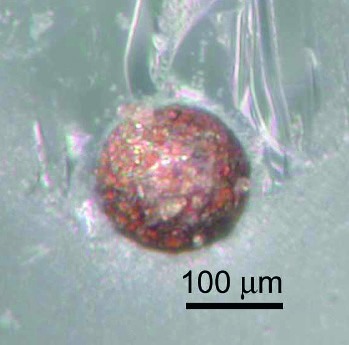
A SMALL INCLUSION. BIG CONSEQUENCES.
When a Microscopic Inclusion Becomes a Business Risk.
NiS inclusions may already be present in raw glass. During thermal tempering, their structure changes. The resulting stresses can later trigger spontaneous breakage in tempered safety glass (TG).
Unplanned replacement costs, complaints and production downtime make early inspection particularly important for facades and other safety-critical applications.
Technical Specifications
Inspection Principle |
Optical Detection Without Thermal Stress |
Detection Range |
NiS Inclusions > 70 µm |
Production Direction |
Horizontal |
Glass Types |
Float Glass, Coated Float Glass |
Coatings |
Low-E, Standard Solar Control Coatings |
Documentation |
Assignment via DataMatrix Code |
Developed on a Solid Base of Data.
Over 10 Years of Research
From Research to Industrial Application.
Around 150 Real NiS Samples
The Basis for Developing and Testing Our Technology.
TU Darmstadt
Developed in Collaboration with the Technical University of Darmstadt.
Frequently Asked Questions
-
Nickel sulfide (NiS) inclusions may already be present in raw glass. During thermal tempering, their structure changes. The resulting stresses can later trigger spontaneous breakage in tempered safety glass (TG). Particularly in facades and other safety-critical applications, this can lead to replacement costs, complaints, production downtime and unresolved liability issues.
-
Ideally, after the first washing step in the production process and before thermal tempering. This allows potentially critical inclusions to be detected before further energy- and cost-intensive processing steps follow. Inspection takes place during horizontal transport.
-
The NiS Scanner detects nickel sulfide inclusions larger than 70 µm. It inspects float glass and coated float glass, including Low-E and standard solar control coatings.
-
Each pane is given a DataMatrix code, through which the inspection result is documented and clearly assigned to that specific pane.
-
The intended equivalence with a heat soak test carried out in accordance with EN 14179 requires general type approval (allgemeine Bauartgenehmigung, aBG). The approval procedure at the German Institute for Building Technology (DIBt) is currently underway. We would be happy to provide you with information on the current approval status and the requirements for your application.
-
The scanner technology is matched to precise conveyor technology. We will discuss the specific requirements and integration into your production line together during a consultation.
Contact
Would you like to discuss a project with us or do you have questions about our products and services? Simply give us a call or send us an email. We look forward to hearing from you!
Contact details
Viprotron GmbH
Ostendstraße 17
64319 Pfungstadt
Germany
- Phone number
- +49 6157 986 380
- info@viprotron.de
Viprotron North America Inc.
7501 S. Jackson Gap Way
Aurora CO 80016 – USA
- Phone number
- +1 313 384 3855
- ric.schmidt@viprotron.com
